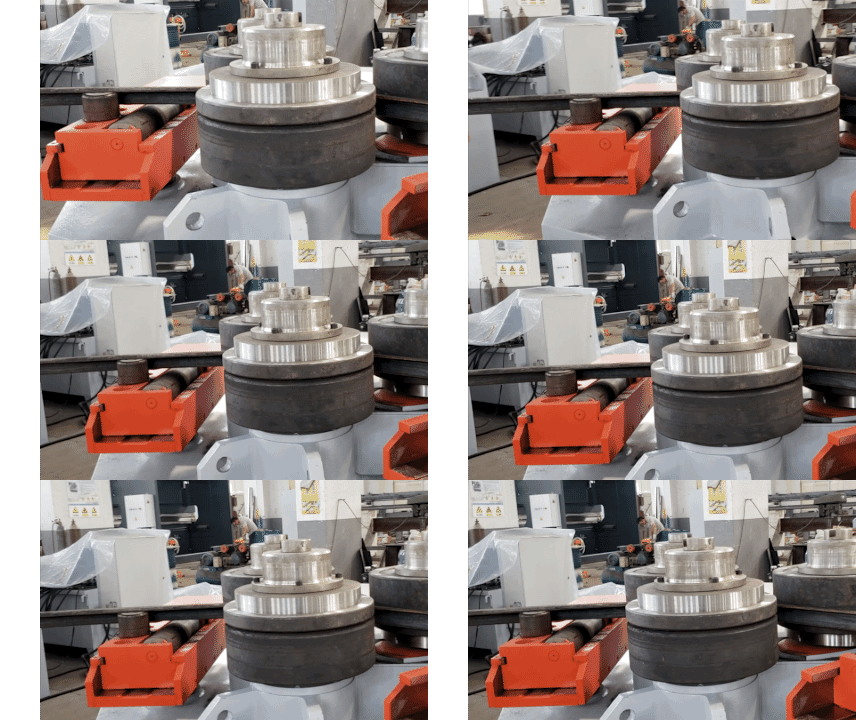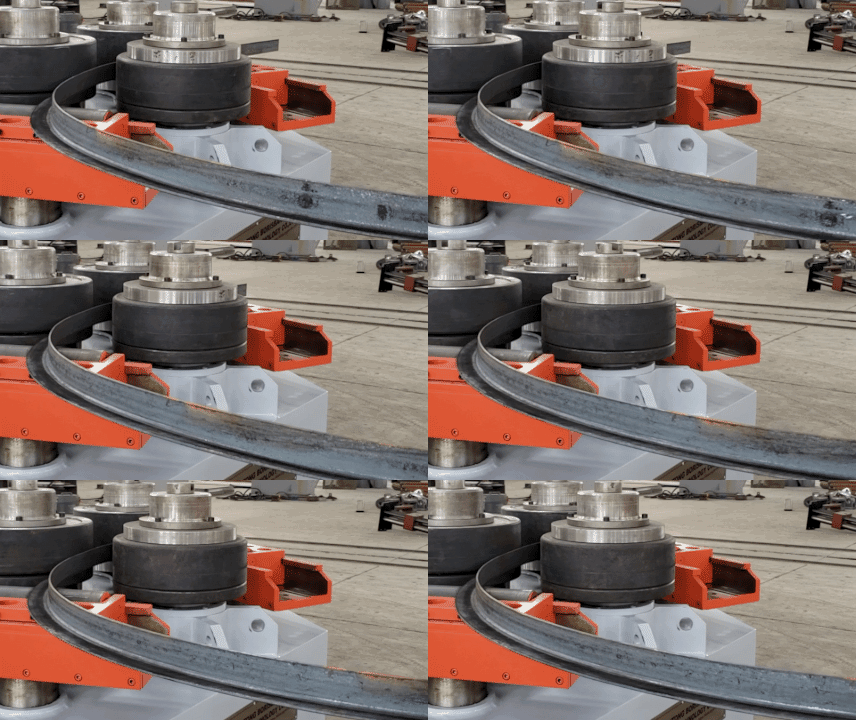
When you feed a section into an Angle Iron Roller, it exhibits more than just a bend; it stages a full-scale rebellion.
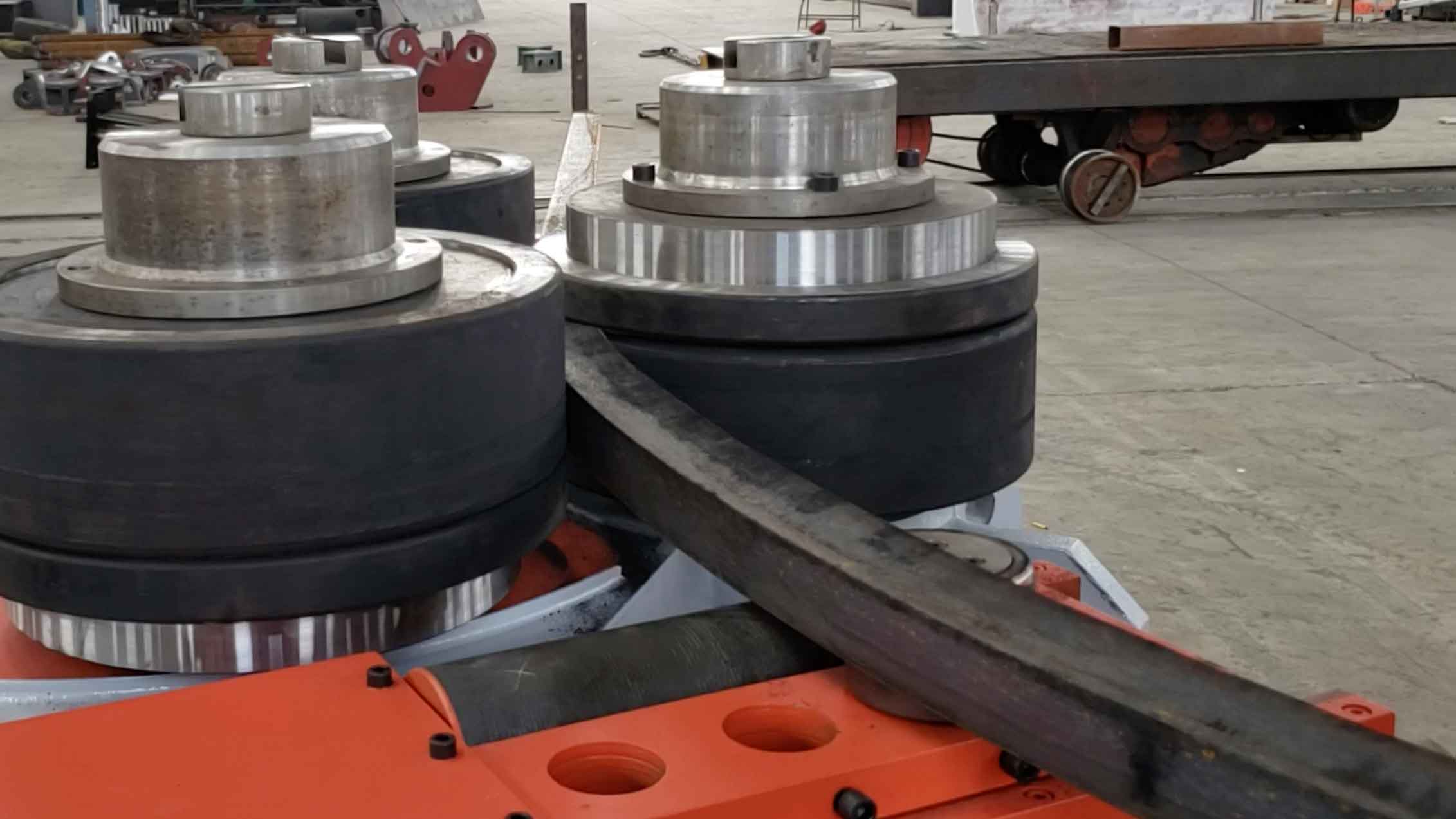
On the shop floor, angle iron is never a “compliant” material. It lacks the geometric symmetry of a round tube and the predictable elongation of a flat plate. When you feed a section into an Angle Iron Roller, it exhibits more than just a bend; it stages a full-scale rebellion. It twists, it gapes, and it attempts to escape the path you’ve set in three-dimensional space. Here, the core of the process is no longer just “how to bend,” but how to stifle the material’s instinct to spiral out of control during violent deformation.
Angle Ring Rolling with PBC Angle Roller systems is complex because it essentially forces an asymmetrical section to perform a symmetrical circular motion. Because the neutral axis of angle iron is severely offset from its geometric center, bending inevitably forces one “leg” into aggressive stretching while the other undergoes brutal compression. This inherent imbalance turns every orientation into a protracted war against physical properties.
From “Mild” to “Militant”: The Five Degrees of Difficulty
The five bending orientations—Leg Out, Leg In, Heel In, Heel Out, and Heel Up—represent five distinct reshufflings of the material’s internal stress fields:
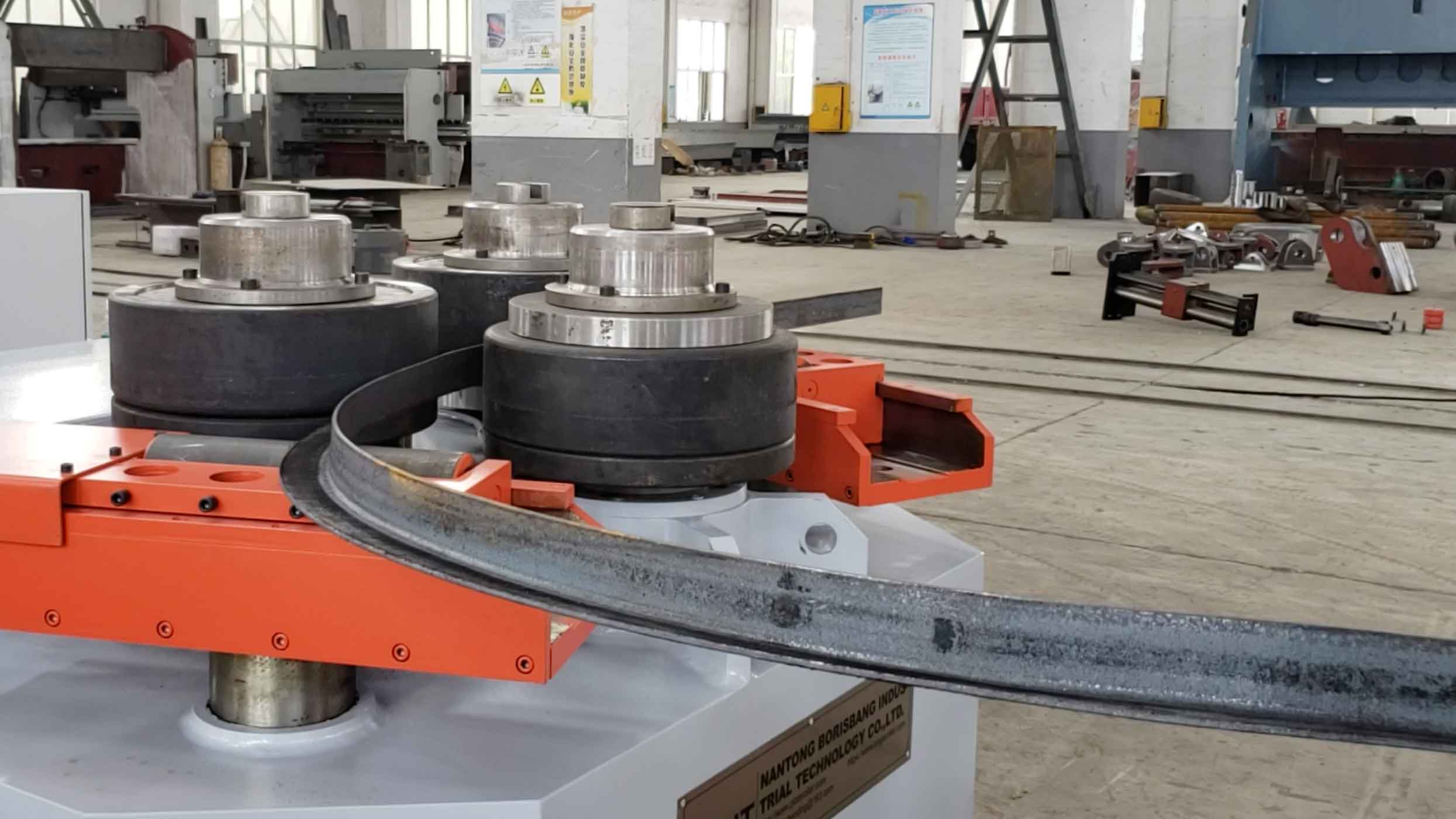
- Leg Out: The environment is relatively forgiving. The outer leg extends during stretching, following a natural path. However, as the radius decreases, the thinning outer leg develops a tendency to flip. Without immediate lateral constraint, the angle will rotate before the operator even notices.
- Leg In: The true test of a master. The inner leg is under intense compression and prone to buckling, creating wave-like wrinkles resembling crumpled paper. This orientation causes the most severe warping and typically requires a larger minimum radius; it is the industry’s most notorious challenge.
- Heel Out/In: These represent bending with the heel (the “V” corner) facing outward or inward. Heel In concentrates compressive force into the “powder keg” of the corner stress zone, often causing subtle local collapses. If bent along the material’s strongest axis, both orientations generate massive resistance, requiring precise, multi-pass rolling at low speeds.
- Heel Up: Close to “hard-way” bending, this requires immense drive force (such as the 30,000 Nm torque of a PBA machine) but remains relatively stable as the section is less likely to gape.
Eliminating the “Flat”: The Economics of Independent Roll Movement
In actual production, Angle Ring Rolling with PBC Angle Roller equipment must overcome not just geometric challenges, but economic ones. Traditional large machines, when processing small workpieces, often leave long, unbent “flat ends.” These are essentially wasted material costs that necessitate tedious secondary cutting.
The PBC (PBA) machine breaks this stalemate through its independent lateral roll movement. Operators can reconfigure the machine’s geometry for smaller workpieces via the control panel in real-time. This flexibility allows for “micron-level” fine-tuning of the roll positions, bringing the bending start point infinitely close to the edge of the profile. This “large machine, small task” adaptability merges heavy-duty rigidity with the high-margin economics of precision fabrication.
Guidance and Tooling: From “Shaping” to “Restricting”
When rolling symmetrical profiles, the material’s own structure resists the forces that might cause twisting. However, during Angle Iron Roller operations, the applied force can easily cause the material to “twist like a pretzel.” At this stage, while the pressure of the main rolls is vital, the “spectator” control systems determine success.
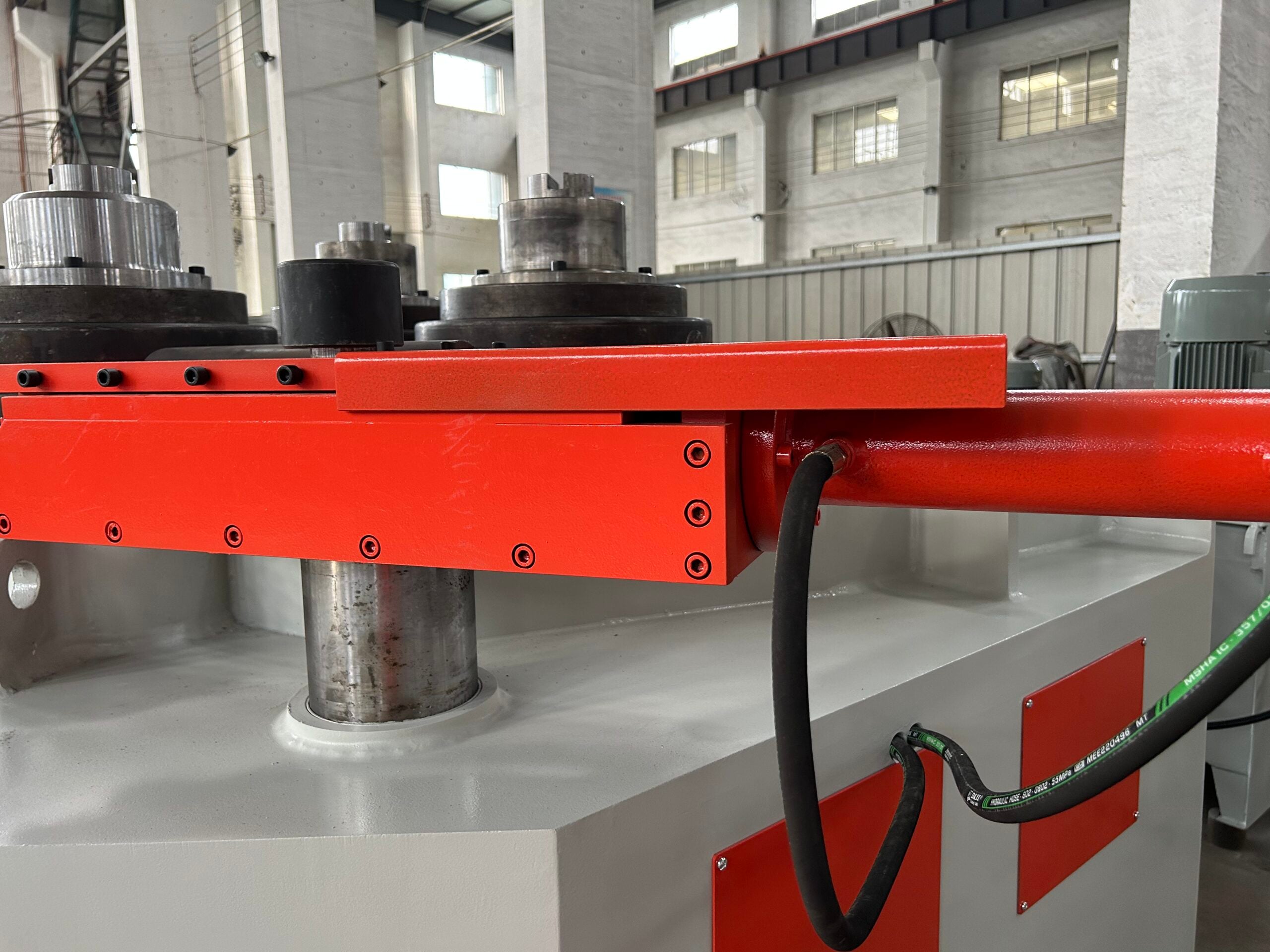
On a typical PBC profile bending machine, a complex matrix of guides defines the “order” of the process. To prevent the vertical leg of the angle iron from folding under extreme force, PBC introduces specialized “Pulling Tooling.”
This tooling is mounted on the guide rolls and acts as an active “pull-back” mechanism during the rolling process, counteracting the extreme pressures that would otherwise collapse the asymmetrical section. It represents a shift in control philosophy: we are no longer merely “pushing” the material; we are using pulling and constraints to force it to maintain its shape under 70 tons of pressure.
The victory in angle bending is not won by the size of your hydraulic cylinders, but by how you manage that inevitable torque. The rollers must be tight enough to prevent slippage and suppress twisting, yet precisely controlled via servo logic to prevent scuffing the expensive metal edges.
Roll bending is the only way to strike a contract between efficiency, cost, and precision. However, you must accept one reality: this is not a “set and forget” machine, but a system that requires a deep insight into material behavior. Ultimately, we are not shaping the angle iron; we are precisely restricting its freedom. In shop-floor terms: The angle will never bend the way you want it to, but through PBC’s process logic and pulling constraints, you can leave it with no other choice.
Ready to Solve the Angle Bending Equation?
For heavy-duty structural profiles where precision meets power, the PBC Series Double-Pinch Angle Roller offers the ultimate mechanical advantage. Engineered for the most demanding structural constraints.
View PBC Heavy-Duty Angle Roller