
AXON-Servo 25
CNC Profile Bending Machine
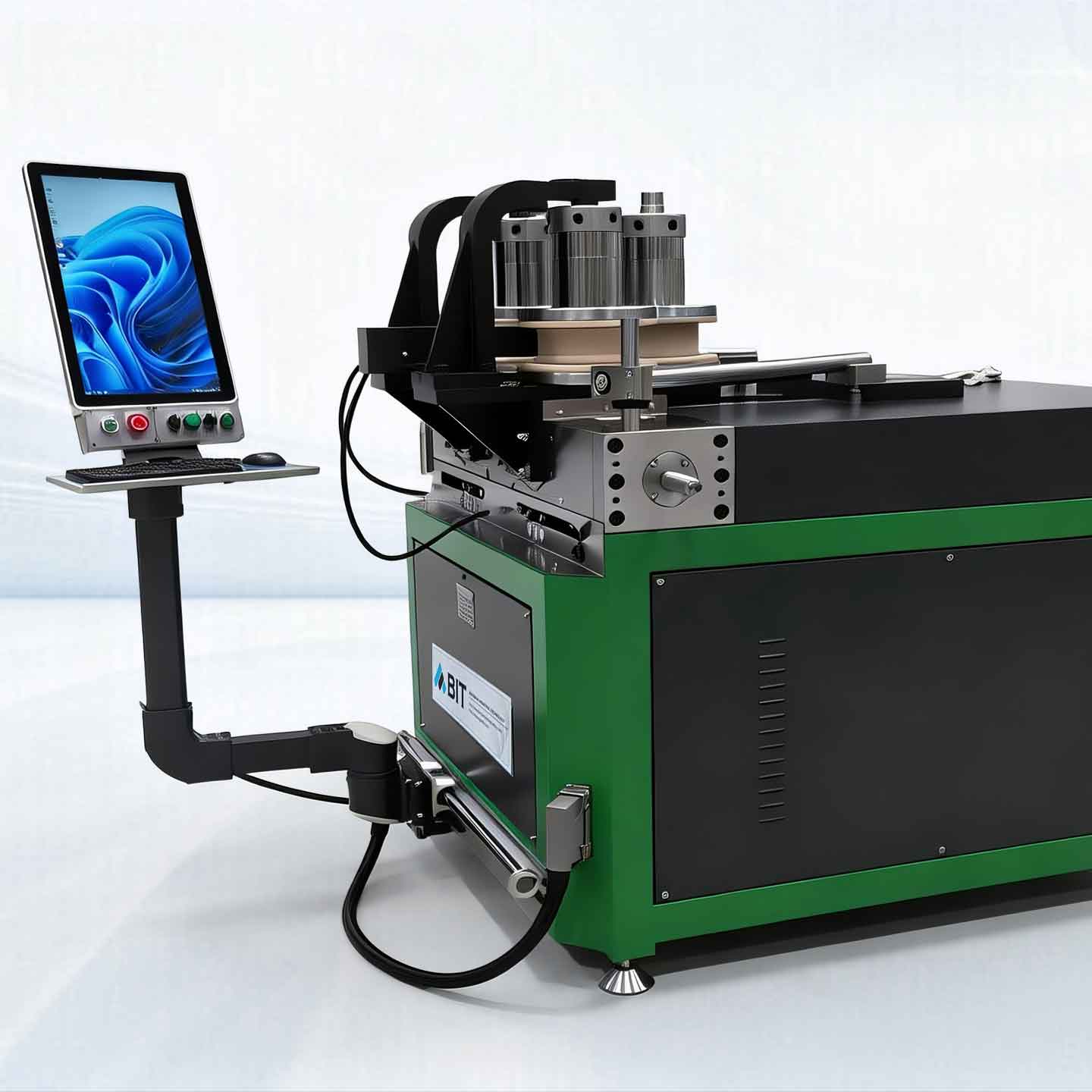
CNC Aluminum Bending | 25-Ton Thrust & Triple-Servo Torque. 80mm shaft diameter with optional IPC for DXF/STEP import and laser radius auto-correction. Master complex multi-radius Architectural Facades and Bumper Beams with zero-scratch precision and 0.01mm consistency for high-end industrial extrusions.
About AXON-Servo 25
CNC Profile Bending Machine
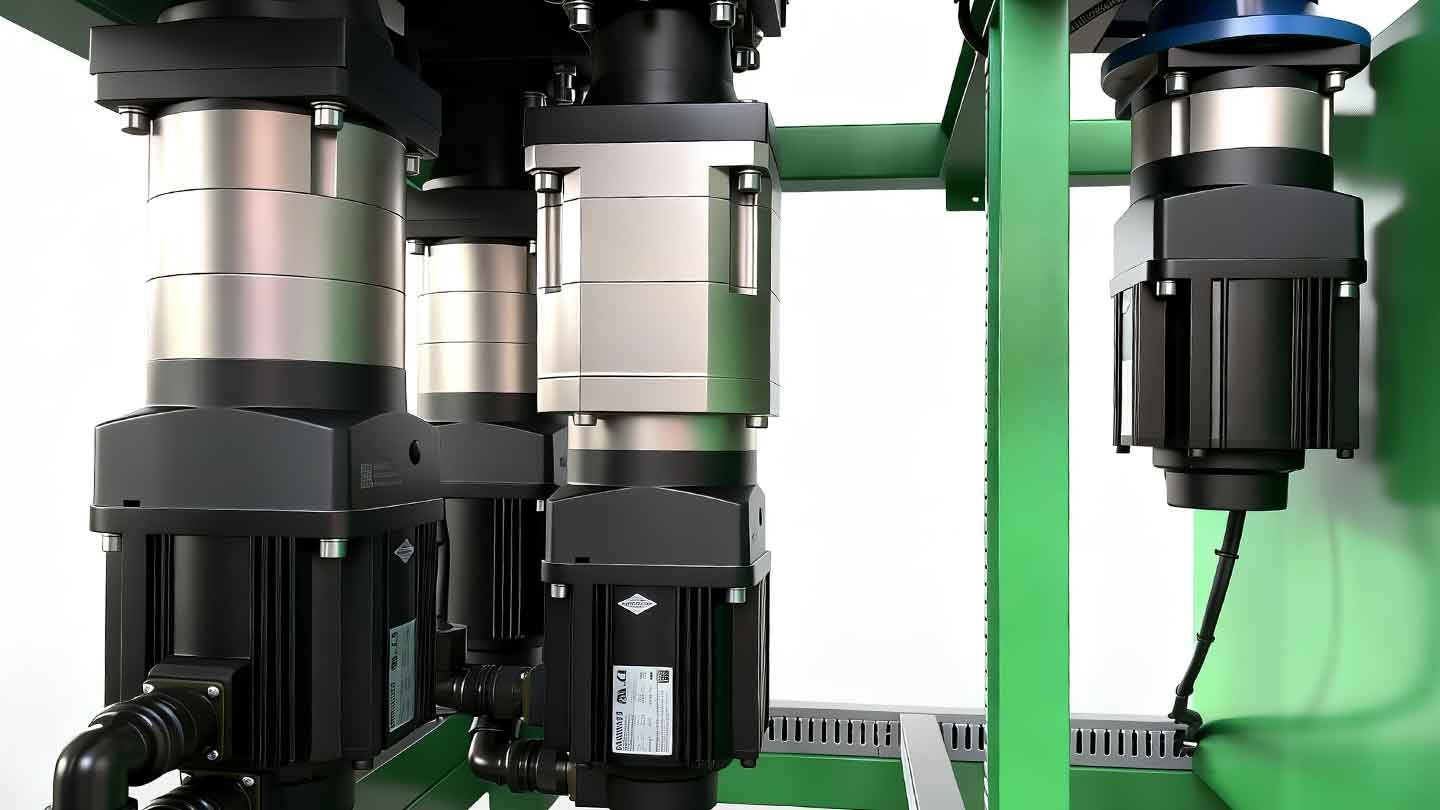
AXON-Servo 25: Enhanced power beyond the AXON-Servo 15 CNC Profile Bending Machine. This high-performance system features triple-axis independent servo drives and integrated laser radius measurement for real-time auto-correction and flawless consistency.
To meet the most complex engineering demands, it offers an optional 3D/Z-Axis bending module, enabling precision spatial forming for Architectural Facades and Window Profiles, high-strength Automotive Bumper Beams, and specialized Aluminum Frames for Flexible Chain Conveyors.
With a 25-ton primary thrust and 0.01mm repeatability, the AXON-Servo 25 ensures zero-damage surface integrity and pinpoint accuracy for even the most challenging high-end 3D architectural extrusions.
Full Servo-Electric Drive: Powerful 25T X-axis and 10T Y-axis servo-driven systems, delivering superior ± 0.01mm positioning accuracy over traditional hydraulics.
Self-Diagnostic & Remote Support: Intelligent fault detection with codes and reserved internet interface for remote debugging and online upgrades.
Massive Data Storage: 128GB SSD with power-off memory, capable of storing thousands of complex processing formulas.
Integrated 3D/Z-Axis Control: Additional 10T thrust Z-axis module enables complex spatial geometries and precise height adjustments for 3D profiles.
Laser Radius Measurement & Correction: Integrated laser system for real-time monitoring and automatic adjustment, ensuring absolute consistency despite material springback variations.
Direct 3D File Import (IPC): Supports USB import of DXF and .STEP files via Industrial PC; the system automatically generates production formulas and bending programs.
Intelligent Springback Compensation: Advanced software automatically extracts material rebound data and calculates arc lengths, eliminating manual trial-and-error.
Real-time 3D Simulation: High-performance interface displays synchronous 3D solid arc changes during machining with zoom and rotate functions.
STRATOS & AXON-Servo
Technical Data for High-End Aluminum Extrusions
| Model | AXON-Servo 12 | AXON-Servo 15 | AXON-Servo 25 | STRATOS 30 | STRATOS 40 | STRATOS 70 |
|---|---|---|---|---|---|---|
| X-axis | ||||||
| Max. Force X-axis (t) | 13 | 15 | 25 | 30 | 40 | 70 |
| Position Accuracy (mm) | ≤0.01 | ≤0.01 | ≤0.01 | ≤0.02 | ≤0.02 | ≤0.02 |
| Driver | Servo Motor * 1 | Servo Motor * 1 | Servo Motor * 1 | Servo Hydraulic* 1 | Servo Hydraulic * 1 | Servo Hydraulic * 1 |
| Stroke Distance (mm) | 200 | 200 | 350 | 300 | 350 | 600 |
| Max. Insertion Width (mm) | 120 | 120 | 200 | 200 | 250 | 530 |
| Hydraulic Oil Volume (L) | – | – | – | 60 | 100 | 300 |
| Y-axis | ||||||
| Shaft Drive | Servo Motor * 3 | Servo Motor * 3 | Servo Motor * 3 | Servo Motor * 3 | Servo Motor * 3 | Servo Motor * 3 |
| Dyn. Shaft Speed Ctrl. (rpm) | 1-15/ (Cust.) | 1-15/ (Cust.) | 1-15/ (Cust.) | 1-15/ (Cust.) | 1-15/ (Cust.) | 1-15/ (Cust.) |
| Torque (Nm) | 3,500 | 6,000 | 6,000 | 8,000 | 11,000 | 30,000 |
| Shaft Height / Custom (mm) | 200 | 200 | 250 | 250 | 300 | 500 |
| Shaft Dia Ø (mm) | 50 | 60 | 80 | 80 | 105 | 150 |
| Deflection Corrector/Supports | Standard | Standard | Standard | Standard | Standard | Standard |
| Front Shaft Distance (mm) | 280-600 | 280-600 | 270-600 | 400-1200/3D | 400-800 | 450~1100 | 680~1600 |
| Z-Axis | ||||||
| CNC-Control | – | Optional | Optional | – | Optional | Optional |
| Force X-axis (t) | – | 5 | 10 | – | 10 | 15 |
| Position Accuracy (mm) | – | 0.1 | 0.1 | – | 0.1 | 0.1 |
| Lifting Distance | – | 0-120 | 0-150 | – | 0-150 | 0-200 |
| Driver | – | Servo Motor*2 | Servo Motor*2 | – | Servo Motor*2 | Servo Motor*2 |
| Control / Software | ||||||
| Flexible Panels | Standard | Standard | Standard | Standard | Standard | Standard |
| CNC System | Standard | Standard | Standard | Standard | Standard | Standard |
| Language | CN / EN / RU | CN / EN / RU | CN / EN / RU | CN / EN / RU | CN / EN / RU | CN / EN / RU |
| IPC / Industrial Control *1 | Optional | Optional | Optional | Optional | Optional | Optional |
| Laser Radius Measure*2 | – | Optional | Optional | Optional | Optional | Optional |
| Capacity | ||||||
| Min. Bending R (mm) | 100 | 100 | 100 | 150 | 150 | 250 |
| Max. Rolls Dia (mm) | 240 | 240 | 400/500 3D | 400 | 600 | 1000 |
| Max. W Bending (mm) | 120 (H: 60) | 120 (H: 80) | 200 (H: 80) | 200 (W: 90) | 300 (H: 80) | 300 (H: 160) |
| Max. H Bending (mm) | 200 (W: 40) | 200 (W: 50) | 250 (W: 65) | 250 (W: 70) | 300 (W: 80) | 500 (W: 100) |
Beyond the Curve: Mastering Structural Integrity and Surface Precision with AXON-Servo 25
In the high-stakes world of precision metal fabrication, the line between an engineering masterpiece and a bin full of scrap is thinner than ever. As modern industries—from iconic architectural landmarks to high-performance automotive safety systems—demand increasingly complex curvatures in large-scale aluminum extrusions, the “old ways” of manual trial-and-error are no longer sustainable. Today’s fabricators are caught in a pincer movement: on one side, architects and engineers are pushing the boundaries of metallurgy with tighter radii and thinner walls; on the other, the global market demands “zero-defect” surface quality and absolute repeatability. To navigate this landscape, a shop needs more than just raw tonnage; it needs a machine that possesses both the industrial brawn and the digital intelligence to orchestrate the movement of metal at a molecular level.
High-End Architectural Facades: The Curtain Wall Challenge
If you spend enough time on the shop floor of a high-end architectural glazier, you quickly realize that a curtain wall isn’t just a building’s “skin.” It’s a complex structural assembly that, for some reason, architects love to draw in ways that defy the basic laws of metallurgy. In the world of precision metal fabrication, bending these aluminum extrusions is a high-stakes game. Unlike a standard bracket, a curtain wall profile is often a multi-hollow, asymmetrical, and potentially thermal-break-equipped beast. When you try to coax a curve out of it, you aren’t just fighting the machine; you’re fighting the internal stresses of the material itself.
The Realistic Hurdles of the Shop Floor
Ask any veteran operator about the “industry pain points,” and they’ll give you a list that reads like a post-mortem report. First, there’s the unrealistic radius. A designer might draw a sweep that looks stunning on a CAD screen, but once that 6063 aluminum hits the rolls, the physics of the cross-section say “no.” If the radius is too tight for the profile’s height, you’re not bending; you’re failing.
Then comes the wall thickness dilemma. To save weight and cost, profiles are getting thinner. But thin walls lack the structural “meat” to resist buckling. Without internal support or a very sophisticated pressure control system, that expensive extrusion collapses like a soda straw. We also see the temper trap. Attempting to bend aluminum in its T6 state—where it’s at its peak hardness—is a recipe for disaster. Without the right approach, the grain structure simply gives up, leading to stress cracks that compromise the building’s integrity. Finally, there’s the cumulative error. If your repeatability is off by even a fraction of a percent, those arches won’t line up at the job site. In the field, “close enough” doesn’t exist when you’re trying to snap in a thousand-dollar glass unit.
Scaling the Solution: The AXON-Servo 25 Advantage
As architectural designs push toward larger, more monolithic spans, the technical stakes escalate. This is where the AXON-Servo 25 enters the conversation, specifically engineered to bridge the gap between heavy-duty structural requirements and high-precision aesthetics. Large extrusions present unique directional challenges that underpowered equipment simply cannot reconcile.
For projects requiring Strong-Axis Bending (the “Hard Way”), the AXON-Servo 25 utilizes its 25-ton all-servo drive system and reinforced 100mm-plus shaft assemblies to master profiles up to 200mm wide and 80mm high. At this scale, the machine isn’t just bending; it is managing massive compressive and tensile forces to keep the “hard-way” curve from twisting or buckling along the neutral axis. Conversely, when the design calls for Weak-Axis Bending (the “Easy Way”), the machine accommodates broad architectural fins and cladding supports up to 250mm wide and 65mm high. The AXON-Servo 25 solves this through synchronized triple-servo torque, ensuring that the outer and inner surfaces move in perfect harmony.
The Intelligence Core: IPC CAD/CAM Integration
The true differentiator of the AXON-Servo 25 lies in its “brain”—an advanced Windows 7-based IPC (Industrial Personal Computer). Unlike traditional PLCs, this IPC-driven system transforms the machine into a fully integrated CAD/CAM workstation. The centerpiece of this technology is the Direct DXF/STEP Import functionality. Instead of an operator manually inputting coordinates and guessing pressure values, the IPC allows for the direct upload of 3D design files.
The software automatically parses the geometry, calculates the neutral axis, and generates the bending data and technical shop drawings on the fly. This automation bridges the gap between the engineering office and the production floor, ensuring that the “as-built” geometry remains perfectly faithful to the original CAD model.
Working in tandem with this high-speed processing is the integrated laser radius measurement system. Since every batch of aluminum has a slightly different “memory,” the laser measures the actual radius in real-time as the part exits the rolls. This data is fed back into the Windows-based IPC, which instantly compensates for springback. This “closed-loop” feedback effectively neutralizes material fluctuations, ensuring that the first piece is just as accurate as the hundredth, even when dealing with high-yield T6 extrusions.
The Three Pillars of the Perfect Bend
So, how do shops move from “hoping it works” to a predictable, repeatable process? It comes down to three fundamental controls, optimized for the AXON-Servo 25.
- Controlling the Geometry (Shape): The IPC-driven triple-axis independent servo drives orchestrate the movement of each roll. By adjusting speed and torque independently based on the imported CAD data, the machine eliminates the scuffing and slippage that lead to geometric distortion, even on 200mm-deep heavy sections.
- Controlling the Metallurgy (Property): By mastering the springback through real-time laser measurement, the AXON-Servo 25’s controller adjusts the forming pressure on the fly. This ensures the physical output matches the digital twin, making manual trial-and-error a thing of the past.
- Controlling the Finish (Surface): Aesthetics are as important as structural integrity. Using non-metallic, high-polymer tooling ensures there is no metal-on-metal violence. By combining these soft-touch rolls with the IPC’s precision servo-pressure control, a shop can deliver a “zero-scratch” finish on massive sections that passes even the most rigorous site inspection.
Automotive Safety: The Precision of Bending Bumper Beams
In the automotive sector, bending aluminum Bumper Beams moves the challenge from aesthetics to life-critical structural integrity. These components are often engineered from ultra-high-strength 7000-series alloys, designed to absorb massive kinetic energy during an impact. The AXON-Servo 25’s 25-ton all-servo thrust is essential here, providing the raw power needed to form these rigid profiles without inducing micro-fractures in the grain structure. By utilizing the IPC-driven DXF/STEP import, manufacturers can ensure the complex, multi-radius curvature matches the vehicle’s aerodynamic profile perfectly. The integrated laser measurement system acts as a final gatekeeper, compensating for the high springback of safety-critical alloys to ensure that every beam maintains the exact crush-zone geometry required by safety standards.
Industrial Logistics: Aluminum Frames for Flexible Conveyors
For the material handling industry, the production of Aluminum Frames for Flexible Chain Conveyors is a game of modular precision. These frames feature intricate internal tracks and T-slots that must remain perfectly parallel during the bending process to allow the chain to glide without friction. Any collapse or “twisting” of the internal guide-way renders the entire section useless. The AXON-Servo 25’s triple-axis synchronization ensures that the drive torque is distributed evenly across the profile’s cross-section, preventing the distortion of these sensitive internal geometries. With the ability to process high-wall sections up to 200mm, the machine allows conveyor manufacturers to create sweeping, continuous curves that reduce wear on the chain and motor, effectively turning a simple frame into a high-performance logistics artery.
Ultimately, the success of a complex bending project isn’t found in the moment the metal begins to curve, but in the technology that controls that transformation. Whether it’s the structural demand of a 250mm architectural fin or the safety requirements of an automotive bumper, the AXON-Servo 25 redefines the shop floor’s potential. By integrating Windows 7-based IPC intelligence with real-time laser metrology, it bridges the gap between a digital CAD model and a physical landmark. In an industry where “close enough” is a recipe for failure, this synergy of 25-ton power and micron-level data ensures that fabricators aren’t just bending profiles—they are delivering the precision, efficiency, and surface integrity that modern engineering demands.